Google Launches A2UI
Google Launches A2UI - An Open Project for Agent-Driven Interfaces
- An Open Project for Agent-Driven Interfaces
Google has publicly launched A2UI (Agent-to-User Interface), an open-source project designed to let AI agents generate rich, interactive user interfaces that can be rendered natively in applications - not just text or sandboxed HTML.
What is A2UI?
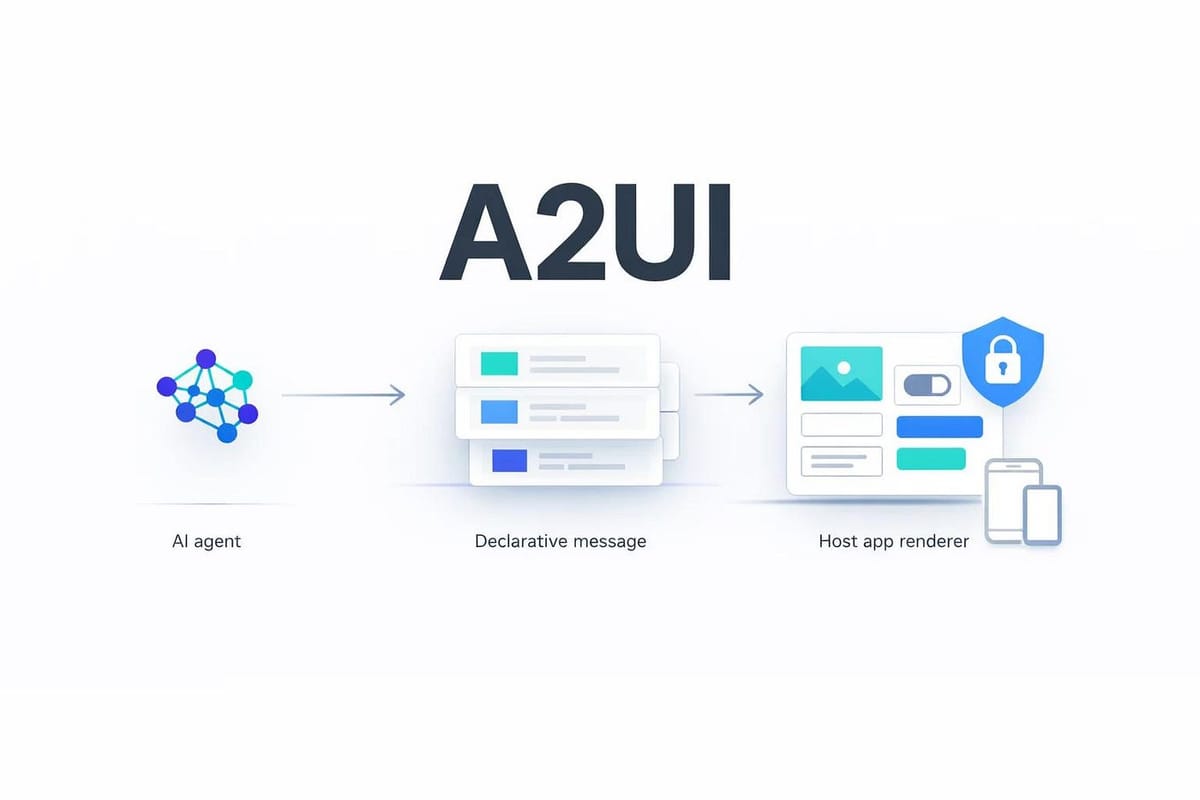
A2UI is an open specification and toolkit that defines a declarative format for agent-generated UIs. Instead of sending executable code, AI agents produce a structured description of UI components like buttons, forms, and panels, which front-end applications then render with their native UI frameworks.
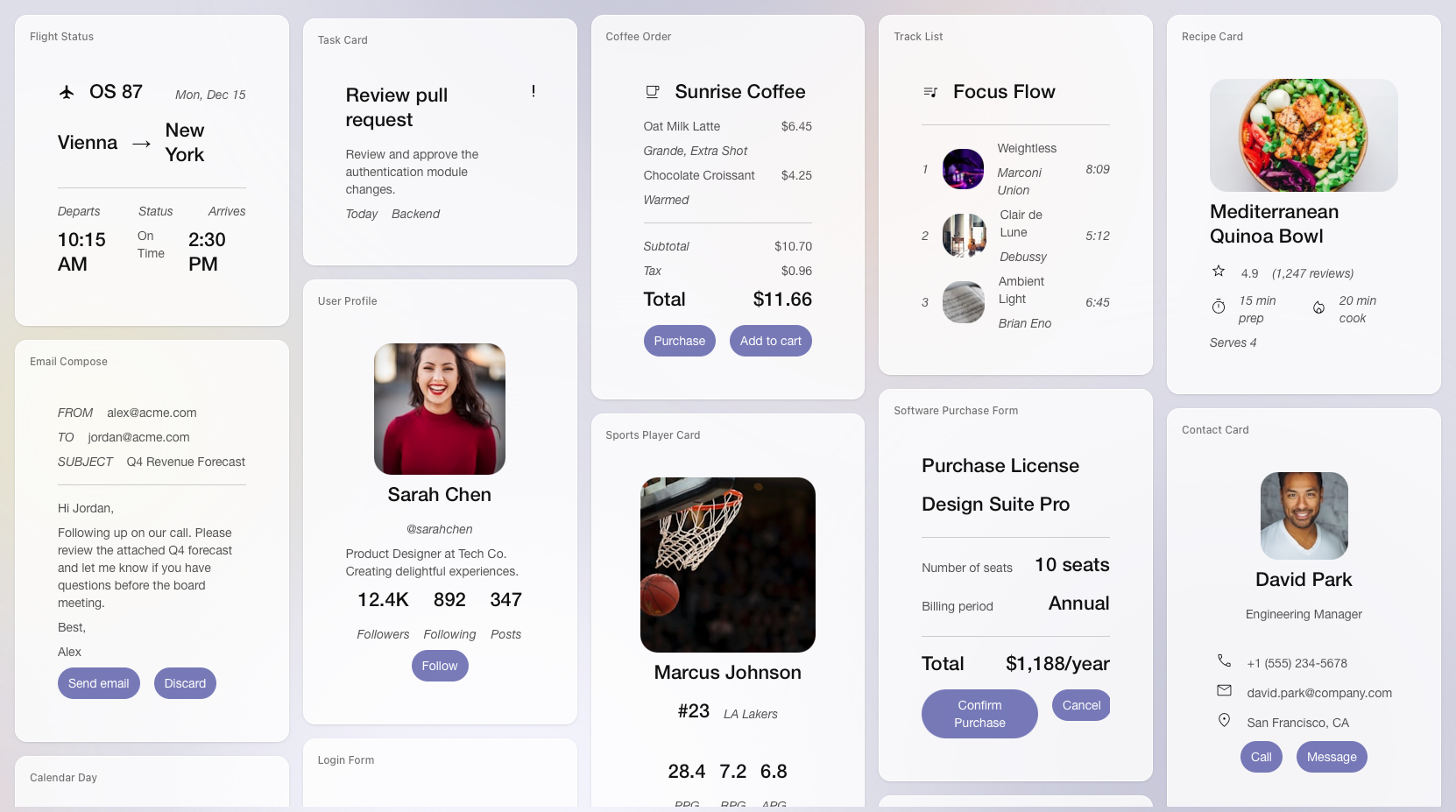
Core idea
Traditionally, AI agents interact through text or clunky sandboxed UI elements, which can be slow and visually inconsistent. A2UI changes this by letting agents send UI definitions as data, preserving security and design consistency within host apps.
Key advantages of A2UI:
Cross-platform support - works across web, mobile and desktop.
Security-first approach - no arbitrary code execution.
Native styling control - hosts retain full design customization.
Dynamic interfaces - agents can build task-specific layouts on the fly.
In this example, the agent decides to respond using a custom component with an interactive chart, along with a separate Google Maps component.
The user uploads a photo, and a remote agent powered by Gemini analyzes it and creates a personalized form tailored to the needs of a landscaping client.
How it works
An AI agent produces a JSON layout describing UI components and data bindings. The host app reads this description and renders elements using its own widget catalog (React, Angular, Flutter, Web Components, etc.). This separates UI generation from UI rendering.
Why it matters
By making A2UI open and collaborative, Google aims to create a standard approach for agentic user experiences. This enables richer interactions in AI-powered applications, moving beyond simple chat and toward fully interactive, context-aware interfaces.
Sources of information:
 Google A2UI Team